


Podcasts about the patchwork perspective
Introducing a Dutch book to English speakers
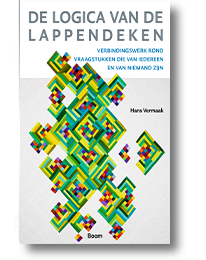
In 2025, I published a Dutch book on dealing with big hairy issues that plague our societies. Its title ‘De logica van de lappendeken’ can probably be best translated as ‘The patchwork perspective”. I am happy to say it was well received and was awarded ‘best book of the year’ in the field of management and change.
I have since received requests for an English translation of the book. Though that is not yet the case, there will be an introductory text soon (as a chapter in the book ‘Changing for the future’ coming out this fall).
In the meantime, I share two podcasts created by NotebookLM based on the Dutch source material. Of course, AI gives its own twist to the ideas: the hosts don’t speak in my voice and emphasise what correlates easily. The podcast thus twists some ideas a bit still gives a decent impression of the whole narrative.
One podcast is a twenty-minute introduction for anybody who is interested, regardless of what they do. No background in change management is needed. Click here to access it.
The other podcast is an hour long. It goes more in depth but is also more jargonny. It is meant for change professionals. Click here to access it.
You can listen to both podcasts as they are. But you can also go for a more interactive mode by asking questions that pop up. (The AI will answer as best it can, but: no guarantees on my part that I agree with it….)
I end with a brief characterisation of the book:
Many social issues are quite complex. They affect us all, but no one is in control of them. We do everything we can to solve them under pressure, but in doing so we often fail to do justice to their complexity. For example, by casting them into an integrated program that purports to provide overview and control. This is precisely what makes these kinds of issues hard to handle. What if many initiatives were woven together like pieces of a patchwork quilt? This is possible if many people are active in local practices but also connect with others in a smart way: sharing know-how with colleagues (spreading), linking different systems (switching) and disrupting cultural patterns (digging). What if we act local, think global, and connect territorial. This is how living networks can grow that can meet our societal challenges. The book discusses how to approach transitions from a patchwork perspective; Hans Vermaak outlines this network logic and the consequences for our everyday actions.



